


What Is a Floor Tile Roll? A Complete Guide for DIY Home Renovations
|
|
Time to read 6 min


|
|
Time to read 6 min
If you've ever looked at flooring options online, you know how quickly they can start to look the same. Peel and stick tiles, sheet vinyl, floor tile rolls... the names aren't exactly helpful when you're trying to figure out what will actually work in your room.
A floor tile roll is basically vinyl flooring that comes in one long roll instead of separate squares or planks. The back is usually self-adhesive, so you don't have to deal with buying and spreading a separate flooring adhesive. You cut the material to fit your room, peel off the backing, and press it into place.
That makes it an interesting option for DIY projects. You get the relatively simple installation of peel and stick flooring, but you don't have a bunch of individual tiles covering the floor.
Before ordering one, though, there are a few things worth knowing. The condition of your floor matters, the size of the room matters, and getting the material flat before installation can save you a lot of frustration later.
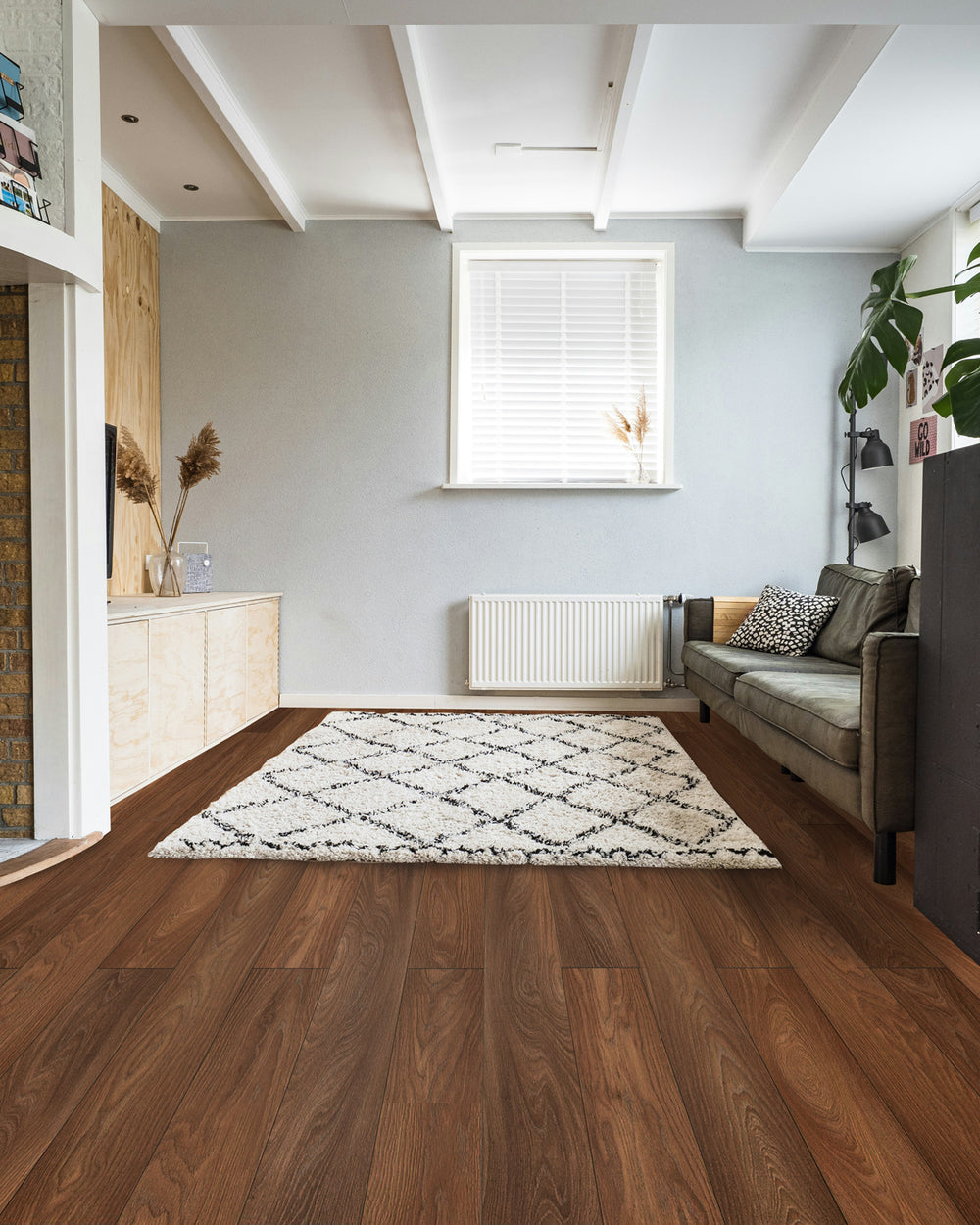
Think of a floor tile roll as a large sheet of vinyl flooring with a tile, wood, stone, or other decorative pattern printed onto the surface.
Instead of laying down dozens of individual pieces, you can cover a much larger section with one continuous piece. Many products are made from PVC or vinyl and have a cushioned or fiberglass-backed layer underneath.
The exact construction depends on the product, so it's worth checking the manufacturer's specifications before buying.
Some floor tile rolls are also waterproof, making them suitable for areas where spills are common. But don't assume every product is automatically suitable for a wet room. Check whether the specific flooring is rated for bathrooms or other high-moisture areas before installing it.
These three options can look similar at first, but they behave quite differently during installation.
Peel and stick floor tiles come as individual pieces. You remove the backing from each tile and place them one by one. That's handy when you're working around corners or replacing a small damaged section later.
Sheet vinyl comes in large sheets or rolls and can cover a room with very few seams. It can give you a smooth, continuous look, but installing large sheets neatly can be harder than it looks. Depending on the product, adhesive may also be required.
A floor tile roll sits somewhere between the two.
You still get a large continuous piece, so there are fewer seams than with individual tiles. At the same time, many products are designed with DIY installation in mind.
For a reasonably flat, medium-sized room, that can be a pretty useful combination.
Don't rush into installation as soon as the roll arrives. Leave it in the room where you're going to use it and follow the acclimation time listed by the manufacturer. Many vinyl products call for roughly 24 hours.
That waiting period is actually useful. Clean the floor, deal with any dirt or dust, and make sure the surface is completely dry before you start.
After unrolling the flooring, you'll probably notice that it still wants to curl back up. That's normal after being stored in a roll.
Give it some time to relax on the floor. If the manufacturer allows it, put something heavy over the curled sections to help flatten them. You want the material sitting comfortably on the floor before you start peeling away the backing.
Measure the room and look at all the places where the flooring will need to change direction or be cut around something. Door frames, cabinets, pipes, and strange little corners are the areas most likely to cause trouble.
For an awkward shape, make a paper template first. It takes a few extra minutes, but ruining a paper template is a lot less painful than ruining a piece of flooring.
Once you're confident with the measurements, lay the roll in position without removing the backing. It gives you one last chance to spot a problem.
When everything looks right, start peeling the backing away little by little. If you're working alone, definitely don't remove all of it at once. You'll have much more control if you expose a section, press that part down, and then keep moving forward.
Work outward from the middle as you go. It gives trapped air somewhere to escape instead of leaving bubbles underneath the flooring.
For a larger room, a floor roller can also be useful. It puts more even pressure on the flooring and helps the adhesive make good contact with the subfloor.
Use a sharp utility knife around walls, door frames, corners, and anything else sticking into the floor area. Make small, controlled cuts instead of trying to remove a large chunk in one go.
And don't copy an expansion-gap measurement from another flooring product and assume it applies here. Check the instructions for your particular floor tile roll because edge and finishing requirements can vary.
Once the flooring is down, give the adhesive whatever amount of time the manufacturer recommends. It can be tempting to put the room straight back together, especially when you've just finished a DIY project. Resist that urge for a little while. Dragging a heavy sofa or cabinet across newly installed flooring isn't exactly the best way to celebrate finishing the job.
There are a few rooms where this type of flooring makes particular sense.
Kitchens are an obvious option. Vinyl is easy to wipe clean, and many floor tile rolls are designed to handle moisture.
Bathrooms can work too, but this is one place where you really need to check the product details. Waterproof flooring doesn't mean you can ignore seams, edges, or the installation instructions.
For a bedroom, wood-look designs can give you the appearance of hardwood without actually installing hardwood.
A living room is another good candidate. Since one roll can cover a large section, you don't end up with a floor covered in lots of small seams.
They're also useful for budget renovations and some rental spaces, particularly when you want to change the floor without taking on a much larger renovation.
Yes, but the old flooring needs to be secure, clean, dry, and fairly smooth first. Loose tiles, deep grout lines, heavy texture, and damaged sections can cause problems underneath the new material. If you can clearly feel or see the imperfections in the old floor, don't expect the vinyl to magically hide them.
Some are, yes. But that's something you should confirm on the specific product rather than assuming it from the word “vinyl.” Even when the flooring itself is waterproof, poorly finished seams or edges can still allow moisture underneath.
For ordinary straight cuts, a sharp utility knife and straightedge should cover most of the job. For things like pipes, door frames, and unusual corners, make a template first. You'll get a much cleaner result than trying to guess the shape while holding the flooring in place.
Yes, particularly if you're covering a straightforward room and the subfloor is already in good shape.
There's no single number that applies to every floor tile roll. The quality of the material matters, but so do foot traffic, installation, cleaning, and what's underneath it. Look at the manufacturer's warranty and wear information when comparing products. Those details will tell you more than a generic lifespan estimate.
If you have a reasonably flat floor and want to change the look without turning the project into a full-scale renovation, a floor tile roll can be a pretty practical option.
You get large-area coverage, fewer seams than individual peel and stick tiles, and an installation process that many DIYers can handle themselves. There are also plenty of patterns and finishes, so you're not stuck with the same basic vinyl look.
For a simple, open room, I'd seriously consider a roll. For a room full of awkward corners and small sections, individual peel and stick tiles may be less frustrating because you can deal with each area separately.
And before you order anything, measure the room properly. Running short near the end is one of those mistakes that turns a quick weekend project into an annoying second trip to the store.


